Slipped Disc

Spinal Decompression from Our Chiropractor near You in Winter Park, FL

If you have back or neck pain, the conditions can reduce your range of motion and prevent you from participating in your favorite activities. At Lions Chiropractic & Injury in Winter Park, FL, we offer various treatments, including spinal decompression, to reduce your discomfort and improve your overall health. Before you schedule your appointment, keep reading to learn more about this treatment!

How Spinal Decompression Works

This therapy involves the use of a specialized decompression table that applies controlled traction to the spine. The gentle stretching reduces pressure on spinal discs, allowing bulging or herniated discs to retract. This process also increases blood flow and nutrient exchange, which supports the body’s natural healing response.

Conditions That Benefit from Spinal Decompression

Spinal decompression is commonly used to treat a variety of conditions affecting the back and neck. Many patients find relief from chronic pain and mobility issues caused by pressure on the spine. Common conditions that respond well to this treatment include:

  • Herniated or Bulging Discs – Reducing pressure on the discs helps them return to their normal position.
  • Sciatica – Relieving nerve compression can ease pain that radiates down the legs.
  • Degenerative Disc Disease – Creating space between the vertebrae can slow disc deterioration.
  • Chronic Back or Neck Pain – Stretching the spine alleviates tension and improves flexibility.

What to Expect During Treatment

A session typically lasts between 15 and 30 minutes. Patients lie on a motorized table while our chiropractor adjusts the traction to target specific areas of the spine. The treatment is gentle and relaxing, with most patients experiencing little to no discomfort. Several sessions may be needed to achieve lasting relief and maintain spinal health.

Contact Lions Chiropractic & Injury for an Appointment Today

If you’re considering spinal decompression, contact Lions Chiropractic & Injury in Winter Park, FL, at (407) 951-5500 today. Our team is ready to answer any questions you have and assist with scheduling your appointment. When you need a trusted chiropractor near you, our team is here to help!

Slipped Disc

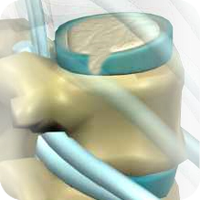
illustration of a disc
Discs do not actually "slip". Rather, they may herniate or bulge outward. A herniation is a displaced fragment of the center part of the disc.

You may have heard the term "slipped disc" used to describe a low back injury. Discs do not actually "slip." Rather, they may herniate or bulge out from between the bones. A herniation is a displaced fragment of the center part or nucleus of the disc that is pushed through a tear in the outer layer or annulus of the disc. Pain results when irritating substances are released from this tear and also if the fragment touches or compresses a nearby nerve. Disc herniation has some similarities to degenerative disc disease and discs that herniate are often in an early stage of degeneration. Herniated discs are common in the low back or lumbar spine.

What Causes Discs to Herniate?

Many factors decrease the strength and resiliency of the disc and increase the risk of disc herniation. Life style choices such as smoking, lack of regular exercise, and inadequate nutrition contribute to poor disc health. Poor posture, daily wear and tear, injury or trauma, and incorrect lifting or twisting further stress the disc. If the disc is already weakened, it may herniate with a single movement or strain such as coughing or bending to pick up a pencil.

How do I Know if I Have a Disc Herniation?

Herniated discs are most likely to affect people between the ages of 30 and 40. Disc herniations may be present without causing pain. The most common symptom will be pain in the area of the herniation that may radiate across the hips or into the buttocks. You may also experience numbness or pain radiating down your leg to the ankle or foot. If the herniation is large enough, you may notice weakness with extension of your big toe and you may be unable to walk on your toes or heels. In severe cases of lumbar disc herniation, you may experience changes in your bowel or bladder function and may have difficulty with sexual function.

How is a disc herniation treated?

Mild to moderate disc herniations can usually be treated conservatively with stretching, exercise therapy and chiropractic care. More advanced cases will often require some form of spinal decompression, such as traction or mechanical decompression, in conjunction with chiropractic care.

Occasionally, a herniation may be severe enough to warrant surgical intervention. These cases are usually reserved as a last resort when other forms of therapy have failed to relieve pain, or if there is significant compression of the spinal cord or nerves.

Contact Us

!
!
!

Please do not submit any Protected Health Information (PHI).

Our Location

Find us on the map