

Your wrist gets a workout every day. Together with the wrist, the hand, fingers and elbow are all responsible for controlling the fine movements of the hand like grasping. The wrist moves up and down, rotates and bends, all possible due to complex, interconnected components. It is a “synovial joint,” which means the bones lie within a capsule and are covered by cartilage and a layer of cells that are about the width of a human hair. These synovial cells secrete a liquid that keeps your wrist lubricated, much like oil for a car engine.
The wrist is a complicated mechanism, made up of eight small bones called the carpal bones (view carpal bones illustration).
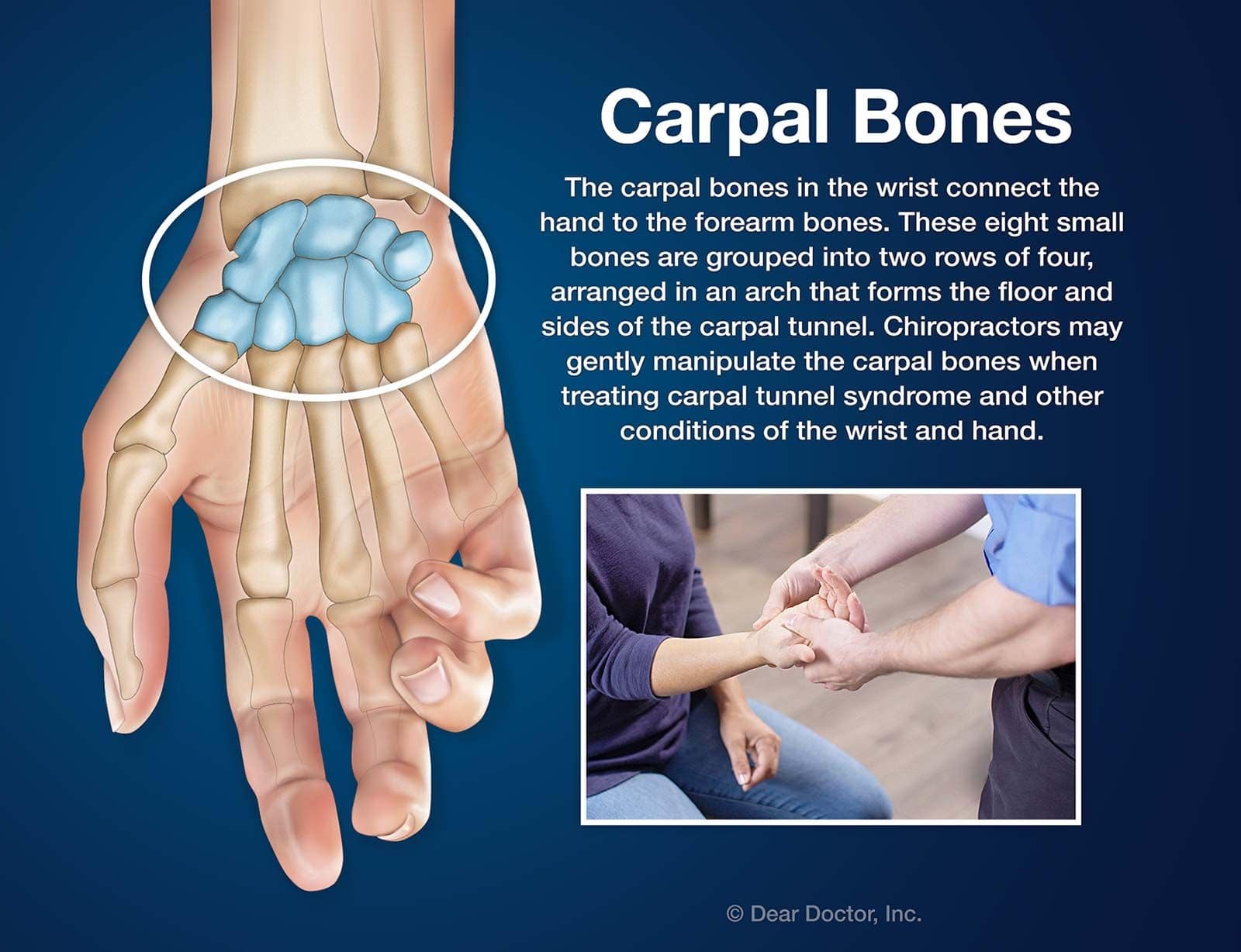
These connect the hand to the forearm bones. Interconnected with this complex bone structure are various tendons, ligaments, nerves and muscles, any of which are subject to injury or damage. Any injury to these intricate structures can have a severe impact on your daily life and work, leading to temporary or permanent disability. Activities as basic as picking up a coffee mug can be difficult.
There are many types of wrist pain, depending on the location and underlying cause. Carpal tunnel syndrome is a well-known disorder that affects the wrist, but there are many others. Chiropractors, who specialize in disorders of the musculoskeletal system, can help diagnose and treat many types of wrist pain with noninvasive, safe techniques.
Common Types and Symptoms of Wrist Pain
Wrist pain may be general or may be accompanied by:
- Clicking or popping sounds, especially when you rotate your hand
- Decreased grip strength
- Decreased range of motion
The pain may feel like an ache as in the case of tendonitis or arthritis, or pins and needles if nerves are involved. The categories of wrist pain form a long list, but some of the most common are:

Repetitive motion syndrome — swelling from overuse, which can press on nerves, causing pain and numbness.
Wrist tendonitis — microscopic tearing and inflammation of the tendons, also often due to overuse.
Wrist bursitis — inflammation of the bursa, which are fluid-filled sacs around the joints. Your wrist may become red, tender and swollen.
Osteoarthritis — wear-and-tear arthritis, which can come with aging and can affect most any joint, including the wrist.
De Quervain's disease — swelling and inflammation of the tendons on the thumb side of the wrist, often from overuse. Your wrist may feel weak and you may notice a grating sensation in your wrist.
Ganglion cysts — potentially painful cysts that develop in the soft tissue, usually on the back of the wrist but possibly on the palm side. They are pouches of synovial fluid that expand out of the joints.
Chiropractic Care for Wrist Pain
A chiropractor will examine your wrist and check how well it's functioning in order to determine the nature of the injury and treat it accordingly. Therapy includes manipulations to relieve pressure on the nerves to reduce swelling and help restore mobility. Chiropractors may recommend you use a splint to immobilize your wrist for a while, particularly in cases of overuse. They may suggest a regimen of icing the hand and recommend resting it as much as possible.
Chiropractors look at more than the symptoms of wrist pain; they will check to see if there are other musculoskeletal disorders that may be contributing factors—because the structures are interconnected. They can also suggest strengthening exercises and stretches you can do at home, as well as preventive tips including learning about ergonomic improvements at work and wearing proper safety gear for physical activity. In some cases, they may refer you to an orthopedist or surgical specialist.
A 2007 study of older patients with hand and wrist pain reported preliminary strong evidence of benefit from chiropractic treatment. If you have wrist pain or weakness, consider making an appointment for a chiropractic evaluation. With no drugs or invasive treatments, chiropractic care can help you recover from wrist disorders that are preventing you from performing your daily activities.