
If you've ever felt tingling or pins and needles in your hands and arms, you've experienced much of what it feels like to have thoracic outlet syndrome (TOS). TOS occurs when blood vessels or nerves are compressed between your collarbone and top rib, leading to pain and numbness. It is most prevalent in adults 20-40 years of age who engage in physical activities involving repetitive overhead use of the arms or heavy lifting.
Those who are concerned that the symptoms they're suffering from are related to TOS will find that chiropractors can not only help diagnose their condition but can also treat it at the root cause while eliminating symptoms.
Causes and Symptoms of Thoracic Outlet Syndrome
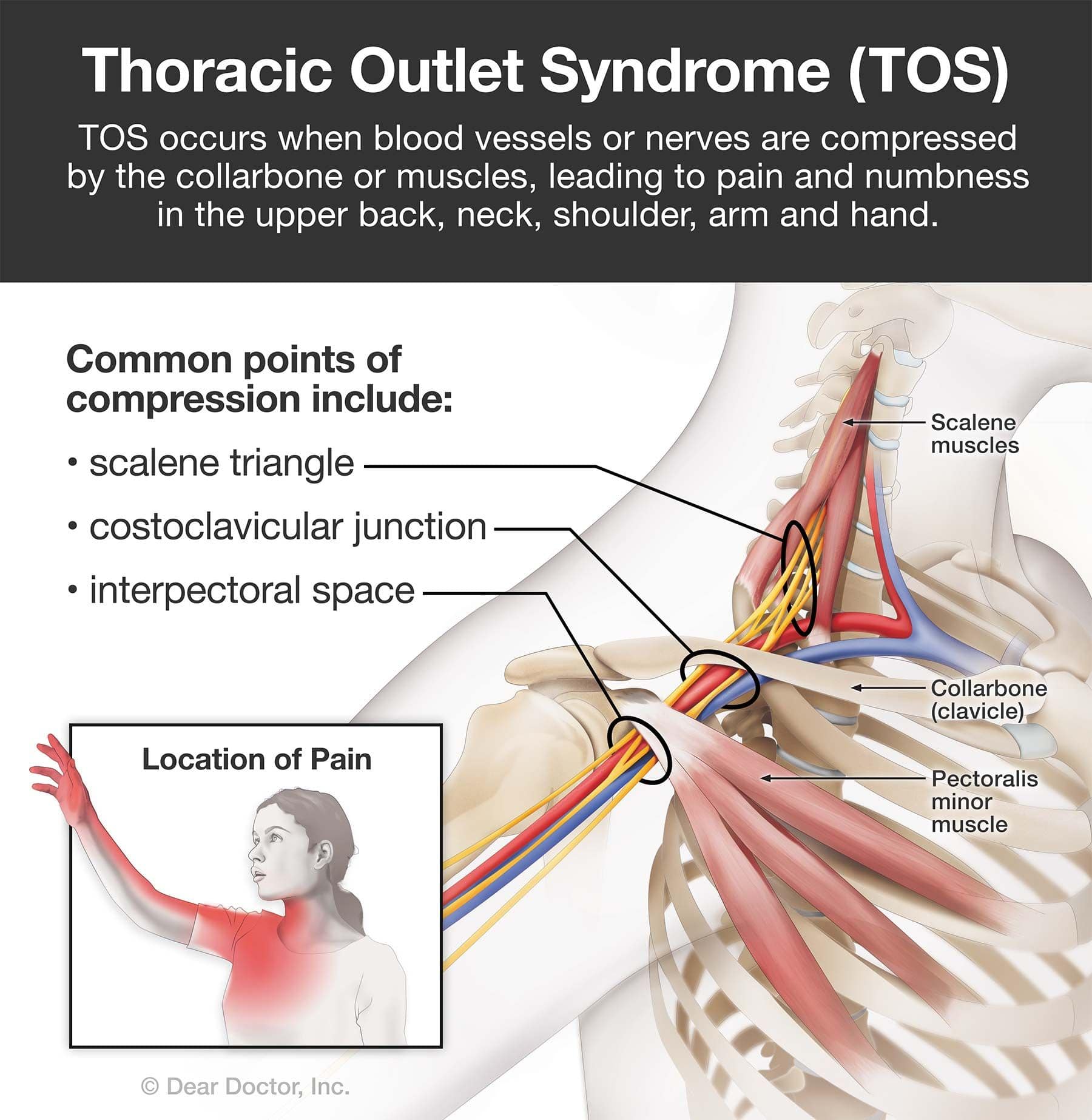
TOS can be caused by a compression of two different structures. The first and most common is the brachial plexus, a group of nerves in the front of the neck, shoulders and chest. The brachial plexus can become compressed by the collarbone, surrounding muscles or a cervical rib (this is an extra rib that some people are born with). TOS can also involve blood vessels of the upper back and neck.
In addition to feeling tingling or pins and needles in the arms and hand, symptoms commonly associated with TOS include dull to severe pain in the hand, arm shoulder and/or neck, as well as arm weakness and numbness in the hands and fingers. The ring and pinky fingers tend to be most affected. TOS can also make grabbing objects difficult. When TOS involves compression of the blood vessels, symptoms may also include swelling, color changes and coldness in the hands and arms with black spots under the fingernails from burst blood vessels.
Diagnosing Thoracic Outlet Syndrome
TOS is more common than most people think. This is because it's difficult to diagnose due to the fact that those who have it show a variety of symptoms, as both the nerves and blood vessels can become compressed. TOS is commonly confused with a condition known as carpal tunnel syndrome. It was originally thought that vascular (blood vessel) compression was responsible for a majority of TOS symptoms, but research shows us that neural (nerve) compression is responsible for symptoms in 90% of those with TOS.
Treatment for Thoracic Outlet Syndrome

Once diagnosed, chiropractors generally treat TOS through a series of interventions, which may include thoracic (upper back) spinal adjustments, stretching, manual trigger point therapy and other myofascial release techniques targeting the affected muscles. Trigger point therapy and myofascial release involve locating tender trigger points in the muscles and applying pressure with a finger or instrument on these points—increasing the pressure until the tension releases and the trigger point softens, reducing pain.
Lifestyle modifications are also important in the treatment and recovery process. A chiropractor will advise TOS sufferers to avoid carrying heavy loads or putting any extra pressure on the shoulders. Things like carrying briefcases, laptop cases and heavy shoulder bags should be avoided whenever possible.
Why Seek Chiropractic Care for Thoracic Outlet Syndrome?
Chiropractic treatment of TOS can help bring balance back to the joints of the spine, especially those in the neck. It can also bring more balance to the shoulders, back and scalenes (deep muscles of the neck). A 2011 case study of a 60-year-old man who had suffered from TOS for seven years without receiving treatment reported that spinal adjustments to the first cervical vertebra (the atlas) alone reduced his symptoms after just one chiropractic visit. Those who are suffering from symptoms associated with TOS can greatly benefit from seeking chiropractic care to alleviate symptoms, remove pressure from the brachial plexus, and treat the cause of the compression.