
While many consider back pain to be the number one cause of workplace disability, it turns out that a painful condition in the arm, wrist and fingers known as carpal tunnel syndrome (CTS) actually accounts for the highest number of workdays missed due to a work-related injury. Nearly half of the CTS cases reported result in 31 or more missed workdays, and over a lifetime this debilitating condition will cost a typical patient about $30,000 in medical bills and missed work.
Carpal tunnel syndrome is the best known from among a group of traumatic conditions known as repetitive stress injuries. CTS is a progressive condition associated with repetitive motion of the hands. It can cause pain, numbness, tingling, a burning sensation, the feeling of electric shocks shooting into the hand and difficulty grasping objects or making a fist. Fortunately, this disabling disorder can often be helped with chiropractic treatment.
Causes of Carpal Tunnel Syndrome
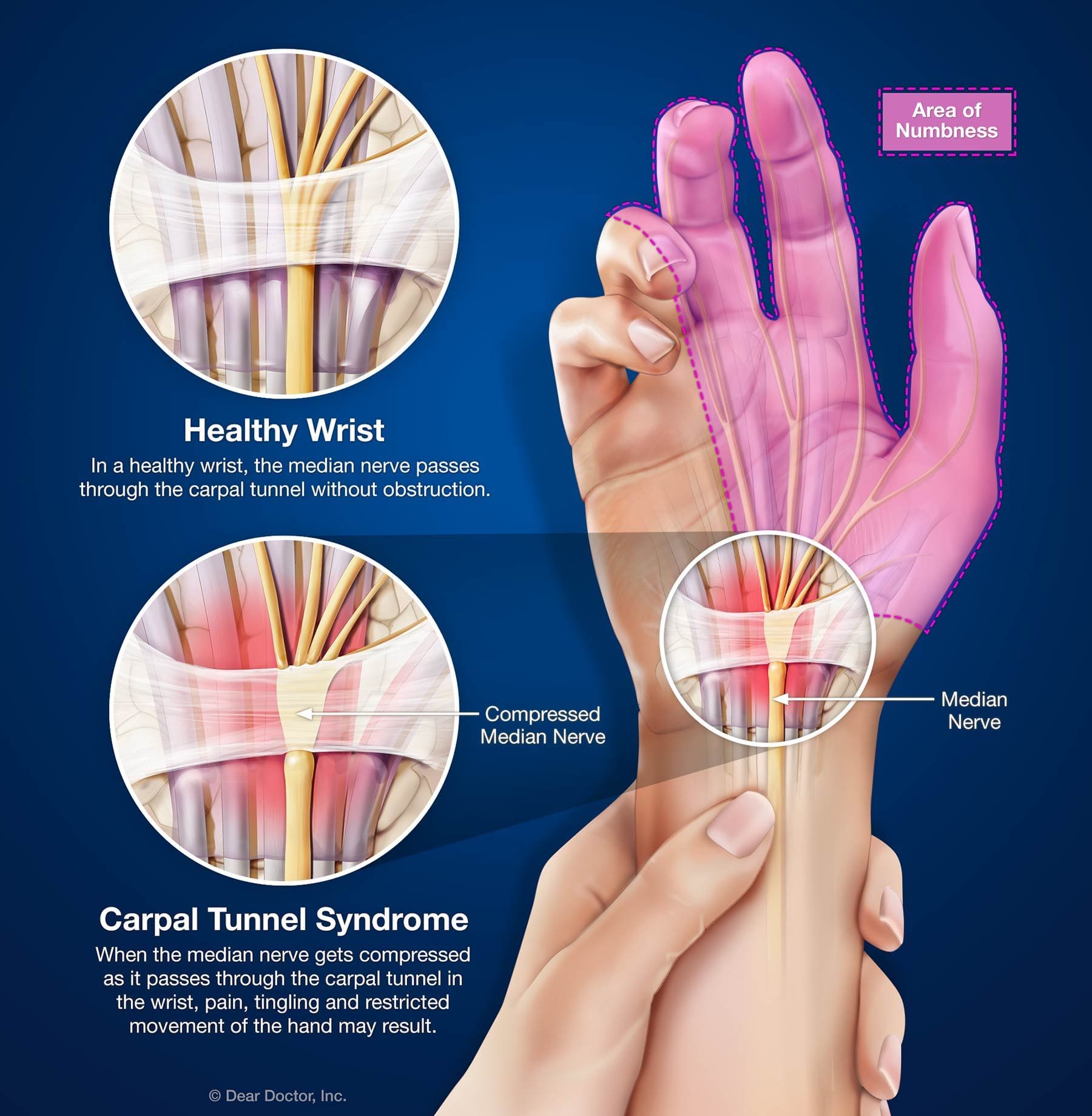
To understand carpal tunnel syndrome, let’s take a look at the anatomy of the wrist. The carpal tunnel is a narrow passageway in the wrist made of bones, ligaments and tendons. The median nerve runs from the forearm into the palm of the hand, passing through the carpal tunnel to provide sensation and function to the thumb, index finger, middle finger and half of the ring finger. Ligaments responsible for finger movement also pass through the carpal tunnel.
While this structure inside the wrist allows for optimal hand and wrist function in people who engage in varied activities throughout the day, some occupations and hobbies require repetitive micro-movements of the hand day after day—such as those required for data entry, working on an assembly line, knitting, playing stringed instruments, meat packing and hairstyling, for example. When repetitive motion causes irritation and swelling, the median nerve can be compressed by the movement of the carpal bones and/or tendons may become constricted, leading to carpal tunnel syndrome. Additionally, small repetitive motions have been shown to cause an inflammatory response in the body, which may play a role in CTS. Women are three times more likely than men to experience this condition, possibly due to the smaller size of most women’s carpal tunnel.
In the early stages of CTS, a person may begin to experience occasional numbness or tingling in the thumb, index and middle finger. As the condition progresses, a numbness, tingling or burning sensation in the fingers occurs more frequently. There may be limited feeling or movement in the hand, which can occur with or without pain in the wrist, palm or the forearm close to the wrist. Numbness and weakness may cause a person with CTS to drop objects frequently since the median nerve controls the thumb function used for grasping.
Treatment for Carpal Tunnel Syndrome
CTS has often been treated by general medical providers with procedures like surgery, steroid injections and pain medication. However, according to the National Institute of Neurological Disorders and Stroke, fewer than half of those who undergo the surgery say their hands feel completely normal following the procedure.
Chiropractic care, in contrast, takes a non-invasive, drug-free approach, so it makes sense to seek a consultation with a chiropractor before resorting to more drastic measures. Upon your visit with your chiropractor, they may take a basic history and perform an examination to find out the root cause of the tingling or numbness. There are many different reasons a person could be experiencing tingling and numbness in the hands that may not be caused by carpal tunnel syndrome, so it’s important to have your CTS diagnosed by a medical professional before any self-treatment.

Chiropractic treatment for CTS may involve a variety of techniques. Since the median nerve actually starts in the upper spine, a chiropractor may approach treatment for CTS with gentle adjustments of the cervical spine as well as of the elbow and wrist.
The chiropractor may also employ soft tissue therapy using specialized instruments and/or therapeutic massage. In addition, hot and cold packs, muscle stimulation, ultrasound, cold laser therapy or traction may be used. Cold laser therapy in particular, designed to improve tissue repair and reduce pain and inflammation, has been used in chiropractic care for CTS for many years.
Stretching exercises may help as well as lifestyle recommendations involving posture, pacing of activities and ergonomic furnishings such as arm and wrist supports, keyboard trays and a special ergonomically arranged keyboard.
Why Seek Chiropractic Care for Carpal Tunnel Syndrome?
Both the National Institute of Neurological Disorders and Stroke (NINDS) and the University of Maryland Medical Center have listed chiropractic therapy as an acceptable alternative to standard medical care for CTS, and clinical research over the past 25 years supports chiropractic care for the treatment and management of CTS. Chiropractic care offers individuals with CTS an effective option to help regain lost function and quality of life—and may help CTS sufferers avoid unnecessary, invasive and potentially unsuccessful surgery.